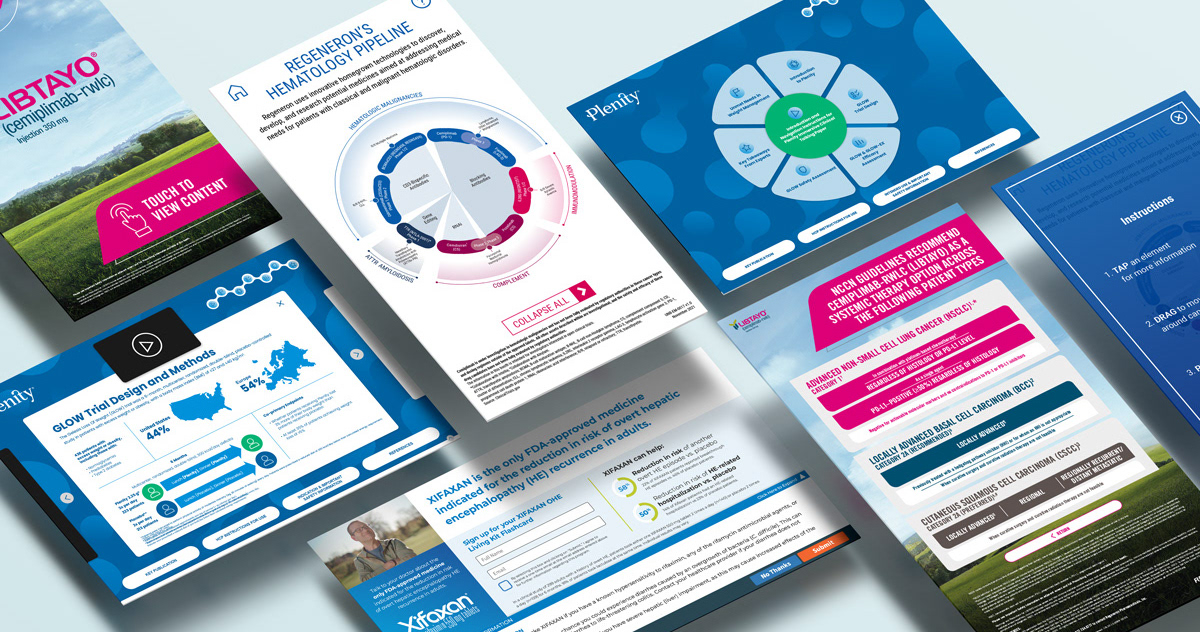
Amazon Advertising — Tradeshow Identity & Experiential Brand Design
Creating immersive tradeshow experiences and large-scale brand systems for a fast-moving, performance-driven advertising platform.
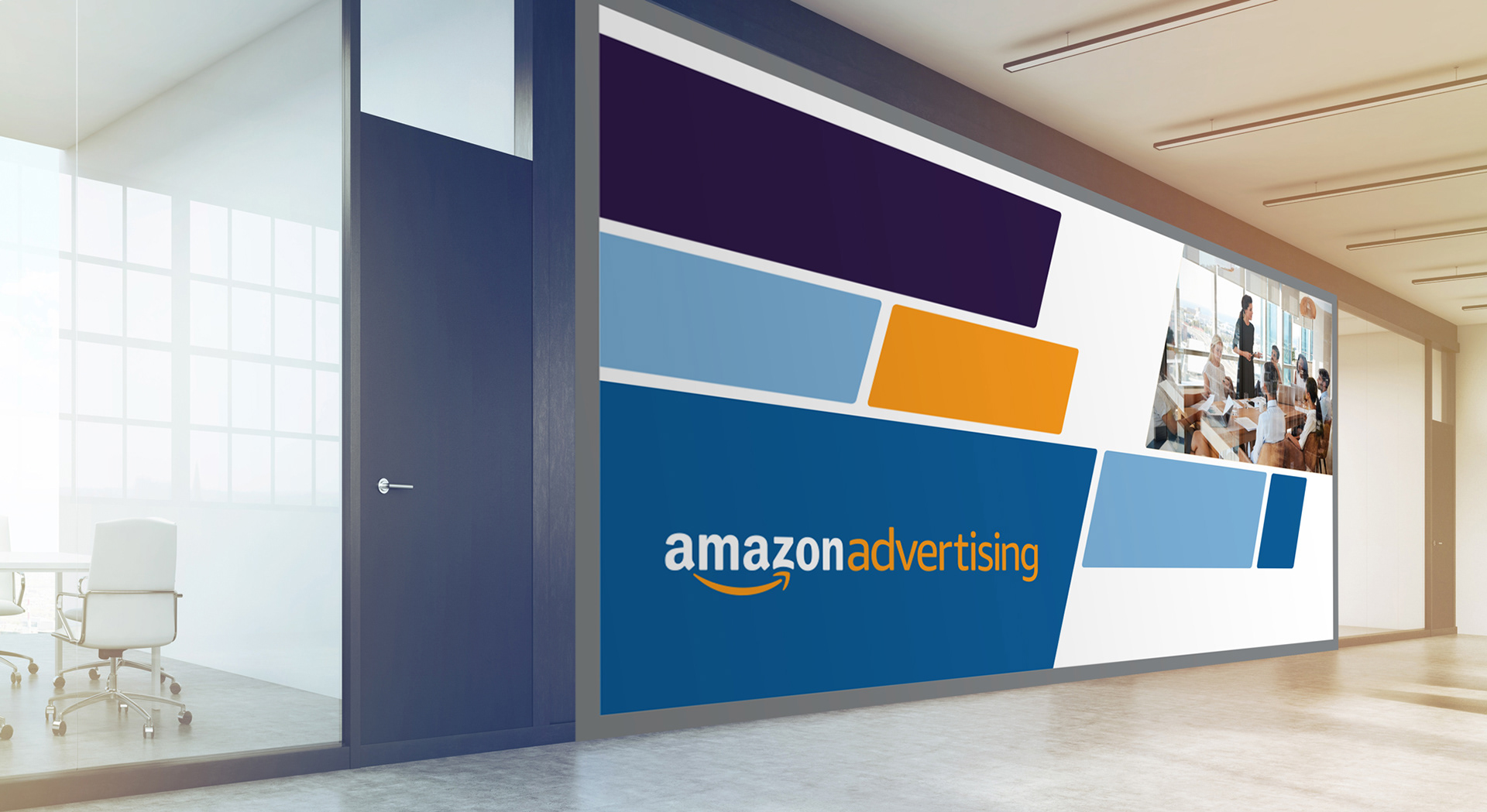
Wall Wrap
Overview
This project focused on designing tradeshow and experiential brand assets for Amazon Advertising, the company’s global advertising platform that connects brands with audiences across ecommerce, streaming, and digital media ecosystems. The work required translating complex advertising and commerce-related messaging into large-scale physical and digital experiences that felt cohesive, engaging, and visually aligned with Amazon’s broader brand ecosystem.
Role
Brand Development
Marketing Materials
Web Design
Tradeshow Design
Marketing Materials
Web Design
Tradeshow Design

Landing Page

Pull-up Banner
Challenge
Tradeshow environments within large-scale technology and advertising industries are often crowded, visually overwhelming, and highly competitive for attention. The challenge for this project was creating a cohesive experiential system that could clearly communicate Amazon Advertising’s products and services while maintaining a strong visual presence within a fast-paced event environment.
At the same time, the experience needed to support multiple forms of communication across signage, environmental graphics, digital displays, and branded touchpoints without losing consistency or clarity. Because the audience included a wide range of stakeholders, from advertisers to enterprise partners, the system needed to balance accessibility, scalability, and strong brand recognition.
Objective
The objective was to create a scalable experiential branding system that improved visibility, communication, and engagement across tradeshow environments while reinforcing Amazon Advertising’s position as a modern, data-driven advertising platform. The experience needed to combine clear messaging, structured visual hierarchy, and impactful art direction across both physical and digital touchpoints.
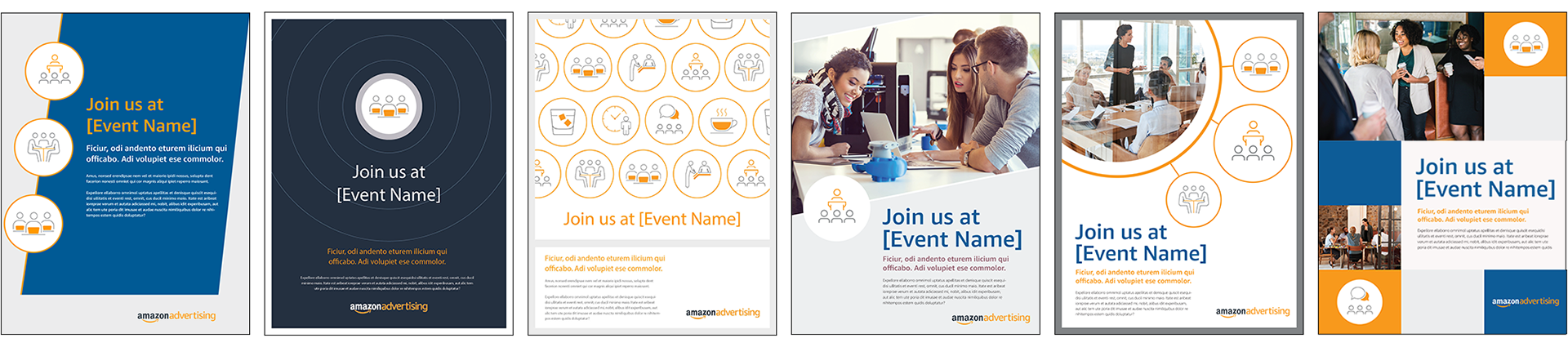
Unused Concepts
Constraints
This project required designing within the constraints of large-scale event environments where visibility, readability, and spatial awareness were critical. Messaging needed to remain concise and highly scannable while still communicating sophisticated advertising and commerce-related concepts.
Additionally, the system needed to scale across multiple environmental applications, including signage, presentation materials, digital displays, and branded collateral, while maintaining consistency across all touchpoints. The experience also needed to align closely with Amazon’s broader brand standards while introducing enough visual energy to stand out within crowded tradeshow settings.
Approach
The approach began with establishing a clear visual hierarchy system optimized for large-format environmental applications. Layouts were designed to prioritize readability at varying distances while ensuring that key messaging remained immediately visible and digestible within busy event spaces.
A scalable visual system was developed to unify all branded touchpoints across the experience. Typography, imagery, color, and spacing were intentionally structured to create consistency across both physical and digital assets while allowing flexibility for different event formats and content needs.
Art direction played a central role in shaping the experiential identity of the project. The visual language was designed to feel modern, energetic, and performance-driven while remaining aligned with the broader Amazon ecosystem. Motion, environmental graphics, and large-scale visual elements were used strategically to reinforce hierarchy, attract attention, and improve audience engagement throughout the space.
Particular attention was given to balancing information density with visual impact. The experience needed to communicate complex advertising concepts quickly without overwhelming attendees, ensuring that the system remained approachable, structured, and visually compelling.
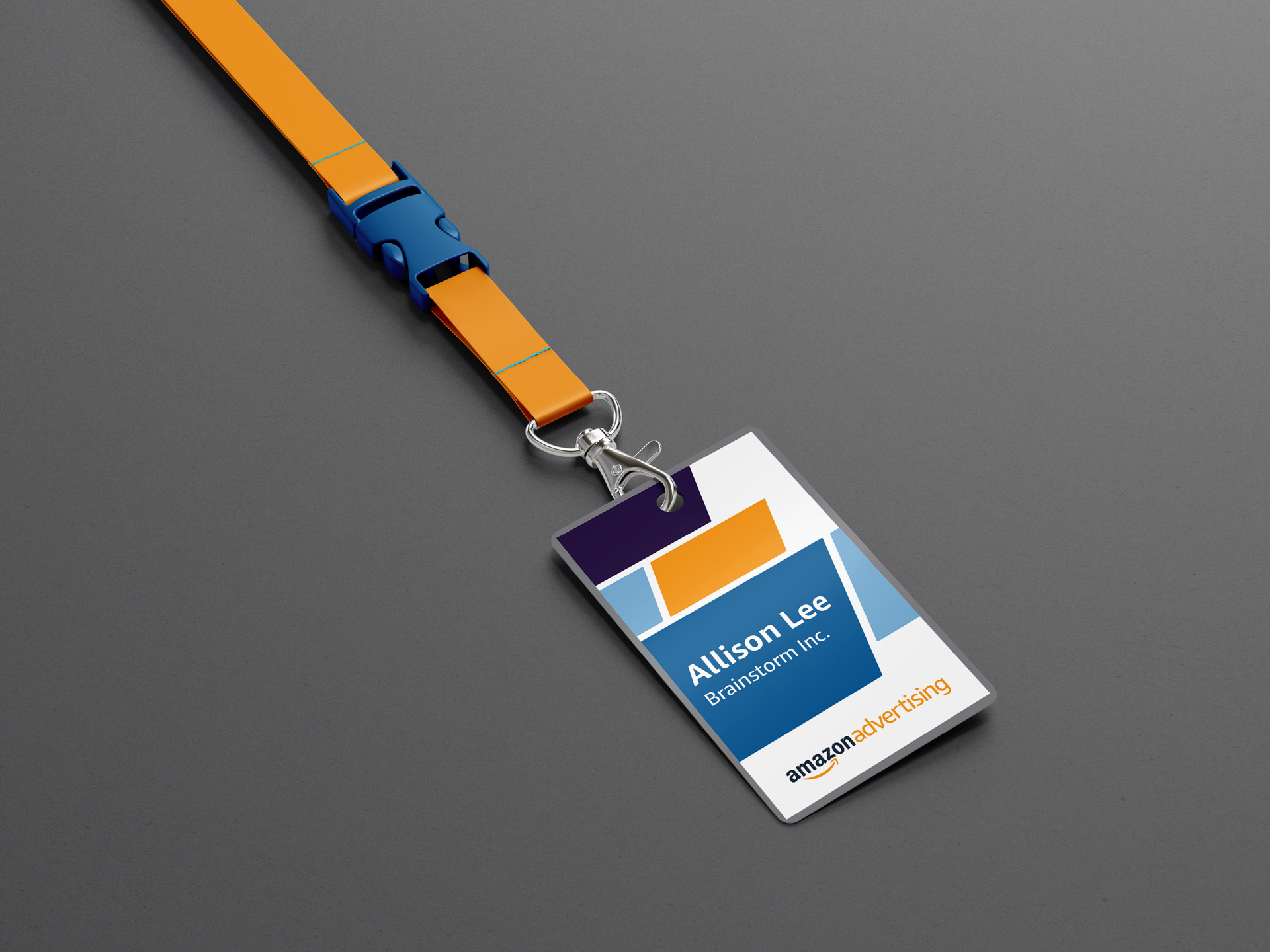
Badge

Poster
Key Decisions
One of the primary design decisions involved prioritizing spatial readability and hierarchy across all environmental touchpoints. Because tradeshow attendees engage with content in motion and from varying distances, layouts and messaging systems were intentionally simplified to maximize clarity and visibility.
Another important decision involved creating a flexible branding system capable of adapting across multiple event formats and asset types without losing cohesion. This ensured that the experience remained visually unified regardless of scale or application.
Additionally, art direction was approached as a functional layer of the experiential system rather than purely decorative branding. Visual elements were used intentionally to direct attention, reinforce messaging, and create a more immersive and memorable brand experience throughout the event environment.
Outcome
The final result was a cohesive tradeshow and experiential branding system that improved communication, visibility, and engagement across large-scale event environments. The refined visual system created stronger consistency across touchpoints while reinforcing Amazon Advertising’s modern, performance-driven identity. The project demonstrates the ability to operate across experiential design, visual systems, and art direction within complex enterprise-scale environments.
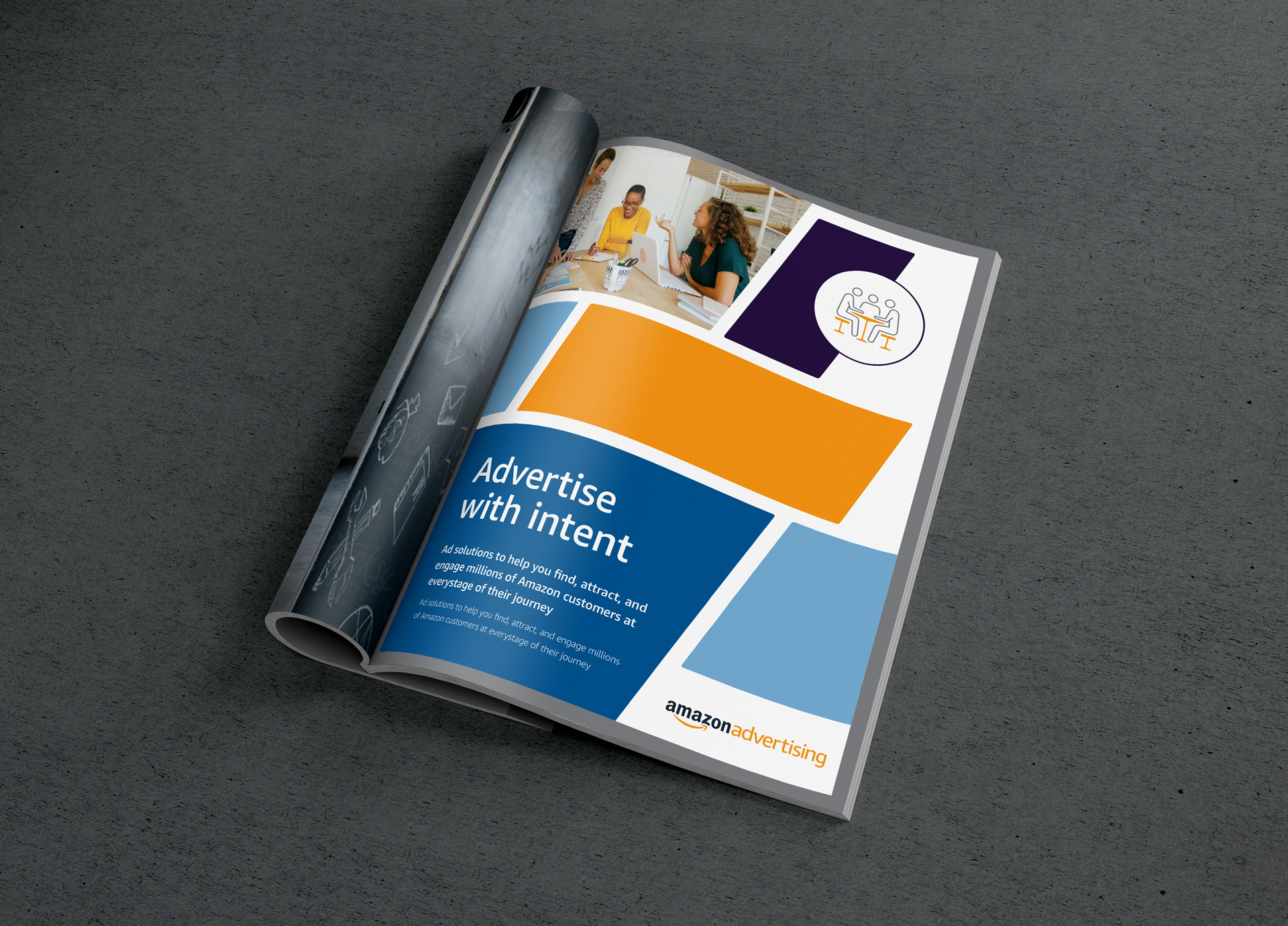
Print Ad
Demonstration
This project highlights the ability to design large-scale experiential systems that balance visual impact, usability, and brand consistency within high-visibility event environments. It demonstrates strength in environmental branding, visual hierarchy, and scalable design systems, while reinforcing an ability to translate complex business and advertising concepts into engaging physical and digital experiences.