
Healthcare Experiences
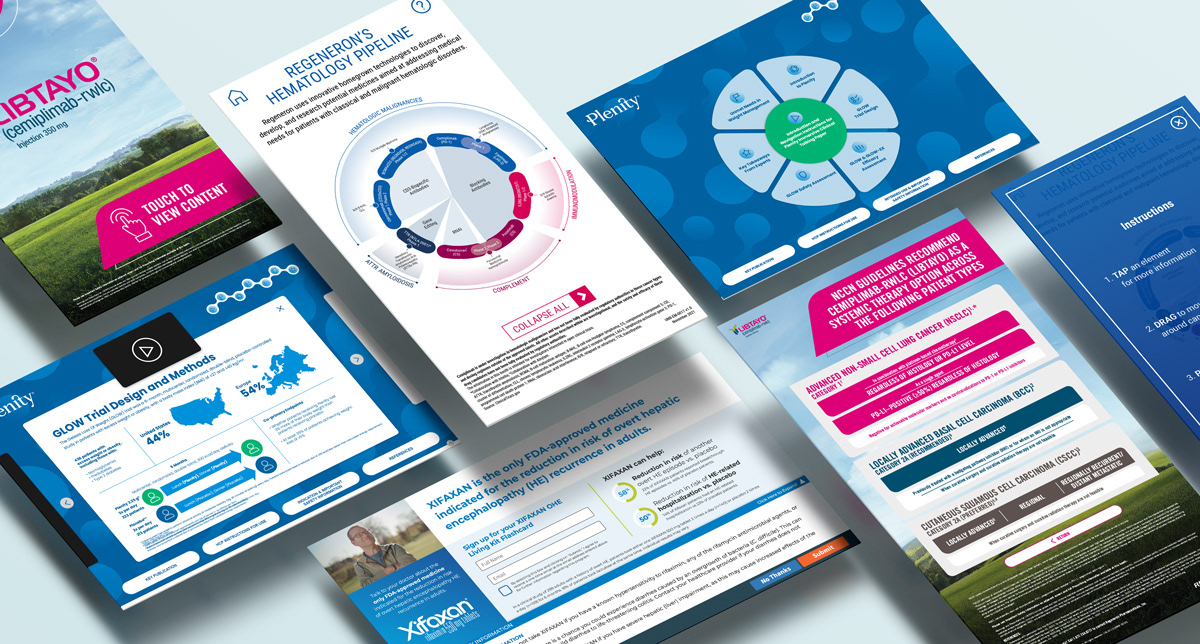
A selection of digital experiences for pharmaceutical and healthcare brands, designed to transform dense clinical content into clear, intuitive, and engaging interfaces.
Overview
Healthcare interfaces must balance dense clinical information, regulatory requirements, and brand standards while remaining intuitive and engaging. Across these projects, I created clear hierarchies and interactions for users to explore content without being overwhelmed.
Role
User Interface
User Experience
Visual Design
Art Direction
User Experience
Visual Design
Art Direction
Main Experience
Task Flow
Plenity
Challenge
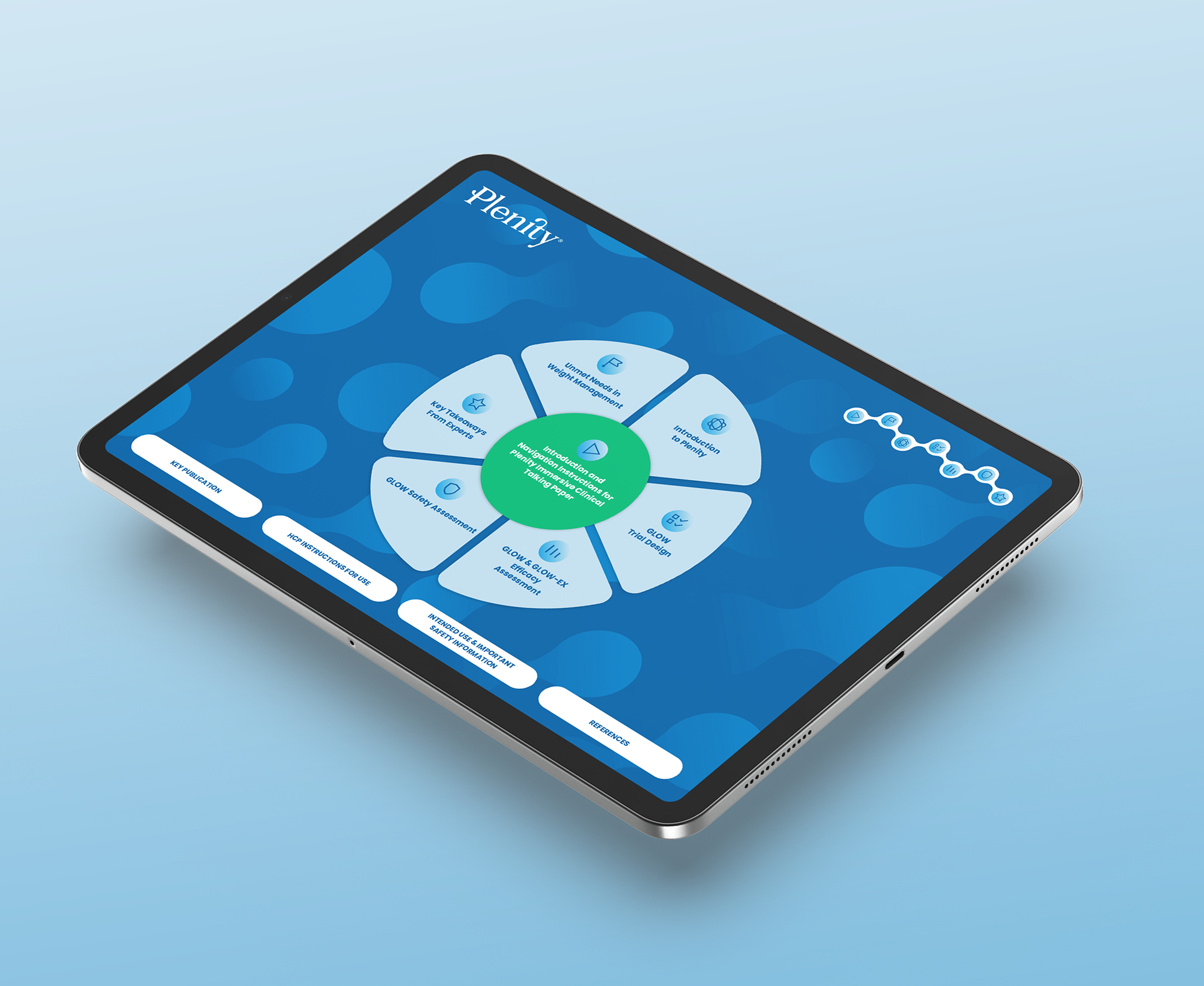
The Plenity Talking Paper was designed as an interactive presentation tool for HCPs, bringing product education, clinical evidence, and supporting resources together within a single experience.
The challenge was organizing a large amount of clinical content—including mechanism of action, trial data, expert perspectives, publications, and safety information—without creating a dense, linear presentation.
Approach
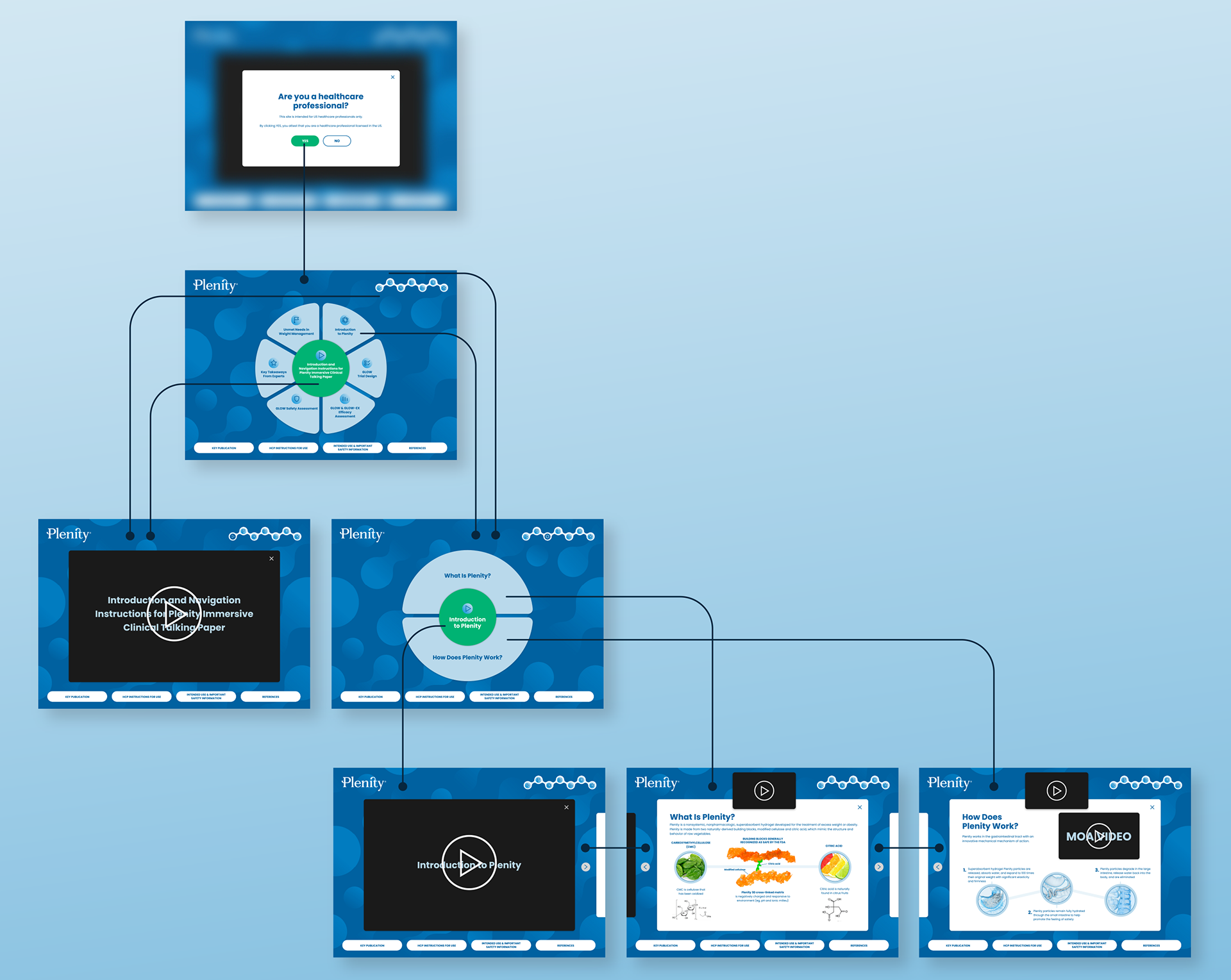
My task was to transform the traditional Talking Paper format into a more exploratory experience. A visual navigation system let HCPs move between topics based on their interests, while video, clinical diagrams, trial information, and supporting resources offered multiple ways to engage with the content.
Rather than requiring users to move through information in a fixed sequence, the experience used nonlinear navigation to make complex information easier to explore while keeping important safety and reference materials consistently accessible.
Features
Nonlinear Navigation
A visual navigation system allowed HCPs to move directly between major content areas.
Progressive Disclosure
Complex information was broken into smaller, focused experiences rather than presented all at once.
Mixed-Media Content
Video, clinical diagrams, data and supporting content worked together within a consistent interface.
Regulatory Accessibility
Safety information, instructions for use, publications and references remained accessible throughout the experience.
Interactive Patient Profile
User Flow
LIBTAYO
Challenge
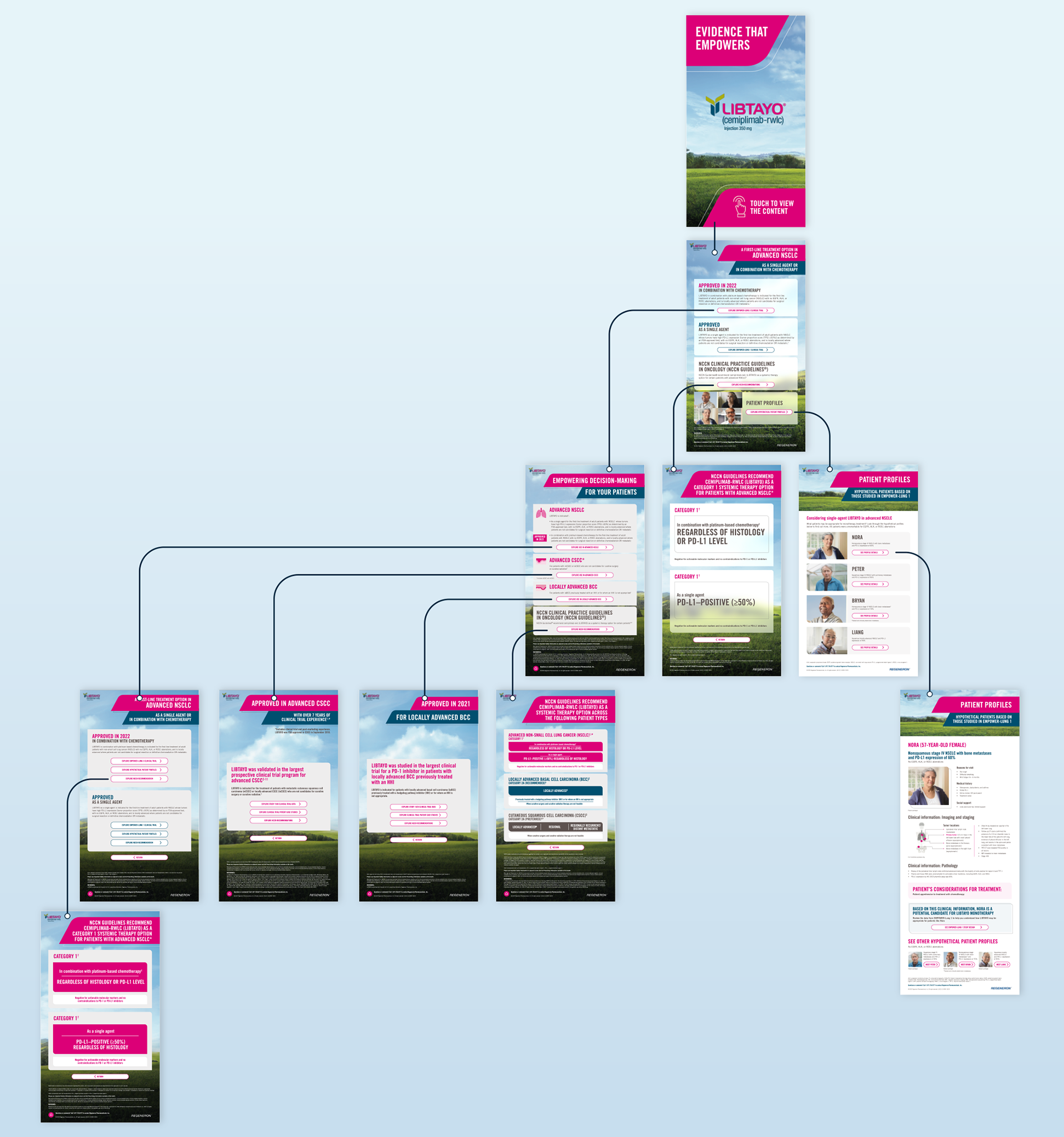
Created for the ASCO Annual Meeting, this interactive LIBTAYO experience was designed to give HCPs and other attendees an engaging way to explore product and clinical information within the conference environment.
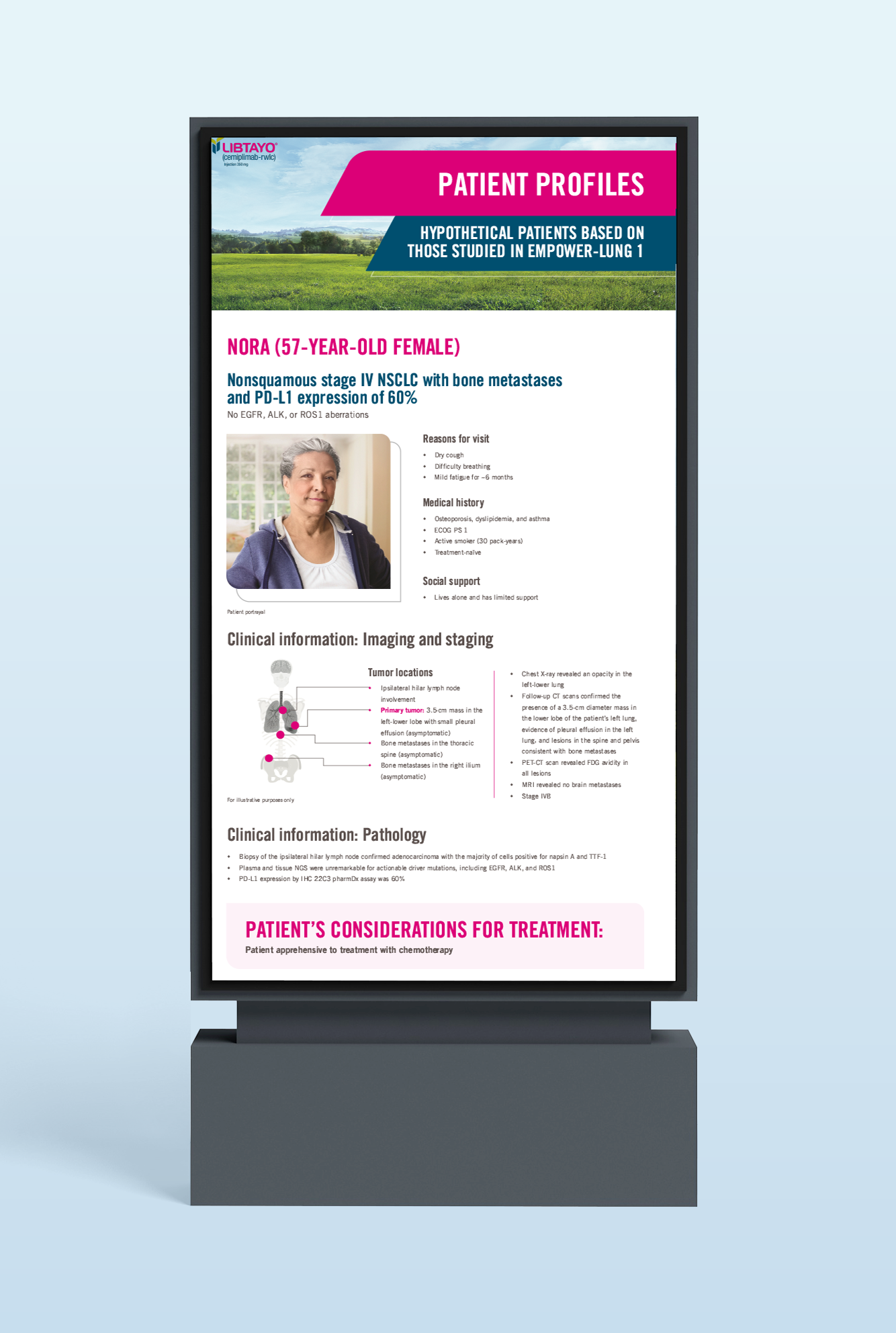
With LIBTAYO spanning multiple indications, the challenge was organizing a significant amount of clinical content into an experience that attendees could quickly understand and navigate on their own. The interface needed to provide clear entry points into Advanced NSCLC, Advanced CSCC, and Locally Advanced BCC, while supporting deeper exploration of clinical trials, patient profiles, and NCCN recommendations.
Approach
I designed the experience around a clear, touch-friendly information hierarchy that allowed attendees to select an indication and progressively move into more detailed content.
Consistent navigation patterns and prominent call-to-actions helped users understand where they were while providing direct access to the information most relevant to them. Within individual indications, users could continue into clinical trial data, hypothetical patient profiles, and supporting treatment recommendations.
Features
Information Architecture
Content was organized into logical pathways based on indication and treatment.
Visual Hierarchy
Typography, cards, color, and CTAs helped distinguish primary information from supporting clinical content.
Consistent Interaction Patterns
Repeated navigation patterns made moving between indications and deeper content user-friendly.
Clinical Content at a Glance
Dense information was structured to support quick scanning while retaining access to deeper evidence.
Interactive Phreesia Platform
XIFAXAN
Challenge
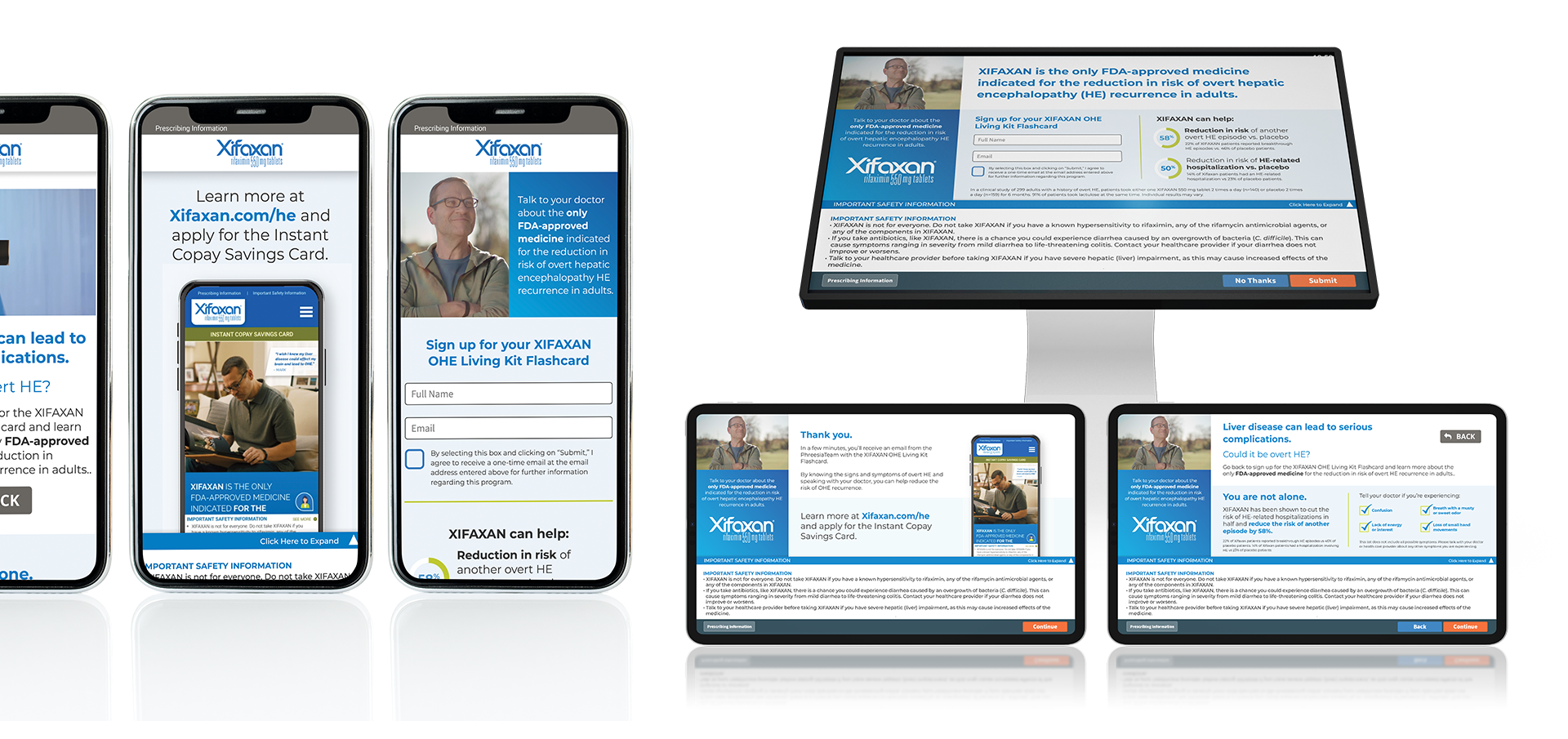
Designed for the Phreesia platform, this XIFAXAN experience reached patients on their digital healthcare check-in journey. Phreesia is used to streamline patient registration and administrative tasks, providing opportunities to deliver relevant health education.
The challenge was to communicate XIFAXAN education and clinical information in an approachable way while integrating data capture, required safety information, and prescribing information within the experience.
Approach
I designed a patient-facing interface that established a clear hierarchy between the primary educational message, supporting clinical data, and user actions. The experience included a sign-up form with validation and consent, efficacy information, expandable ISI, prescribing-information overlays, and an autofill interaction.
Because the experience appeared within the broader Phreesia journey, the UI needed to be immediately understandable without adding unnecessary friction.
Features
Form & Interaction Design
Clear input states, validation, and confirmation patterns supported data entry.
Layered Information
Modals and expandable content kept secondary information accessible without overwhelming the primary screen.
Data Visualization
Clinical statistics were elevated visually to make key efficacy information easier to identify.
Compliance Within the UI
Safety and prescribing information were integrated directly into the experience rather than treated as an afterthought.
Interactive Pipeline
User Flow
Regeneron Hematology Pipeline
Challenge
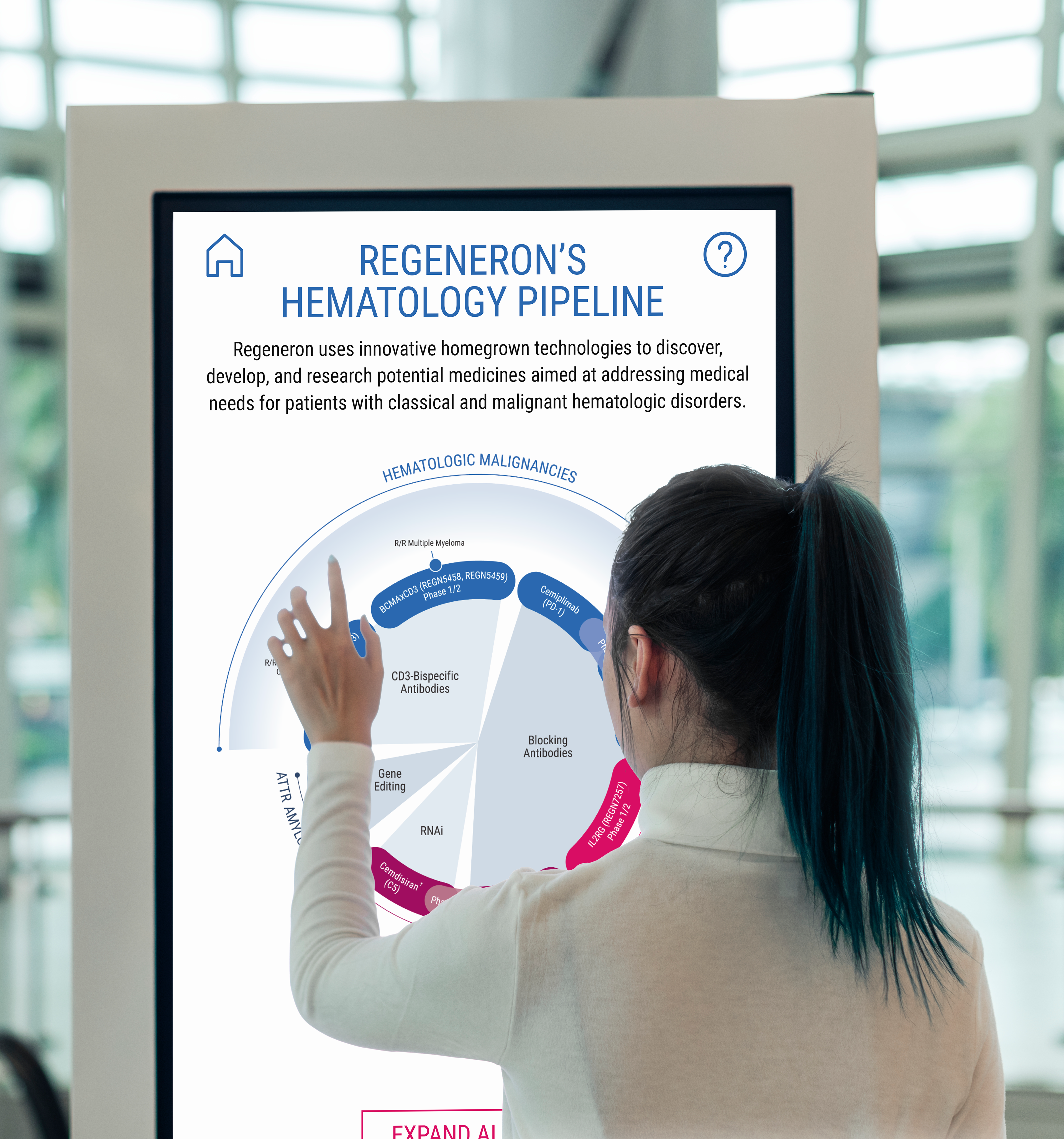
Created as an interactive booth experience for the ASH Annual Meeting, the Regeneron Hematology Pipeline gave attendees a hands-on way to explore the company's investigational therapies across multiple areas.
The challenge was translating a dense scientific pipeline into an experience that could be quickly understood and explored within a busy conference environment. The interface needed to communicate the pipeline while allowing users to dive deeper into individual therapies and supporting information.
Approach
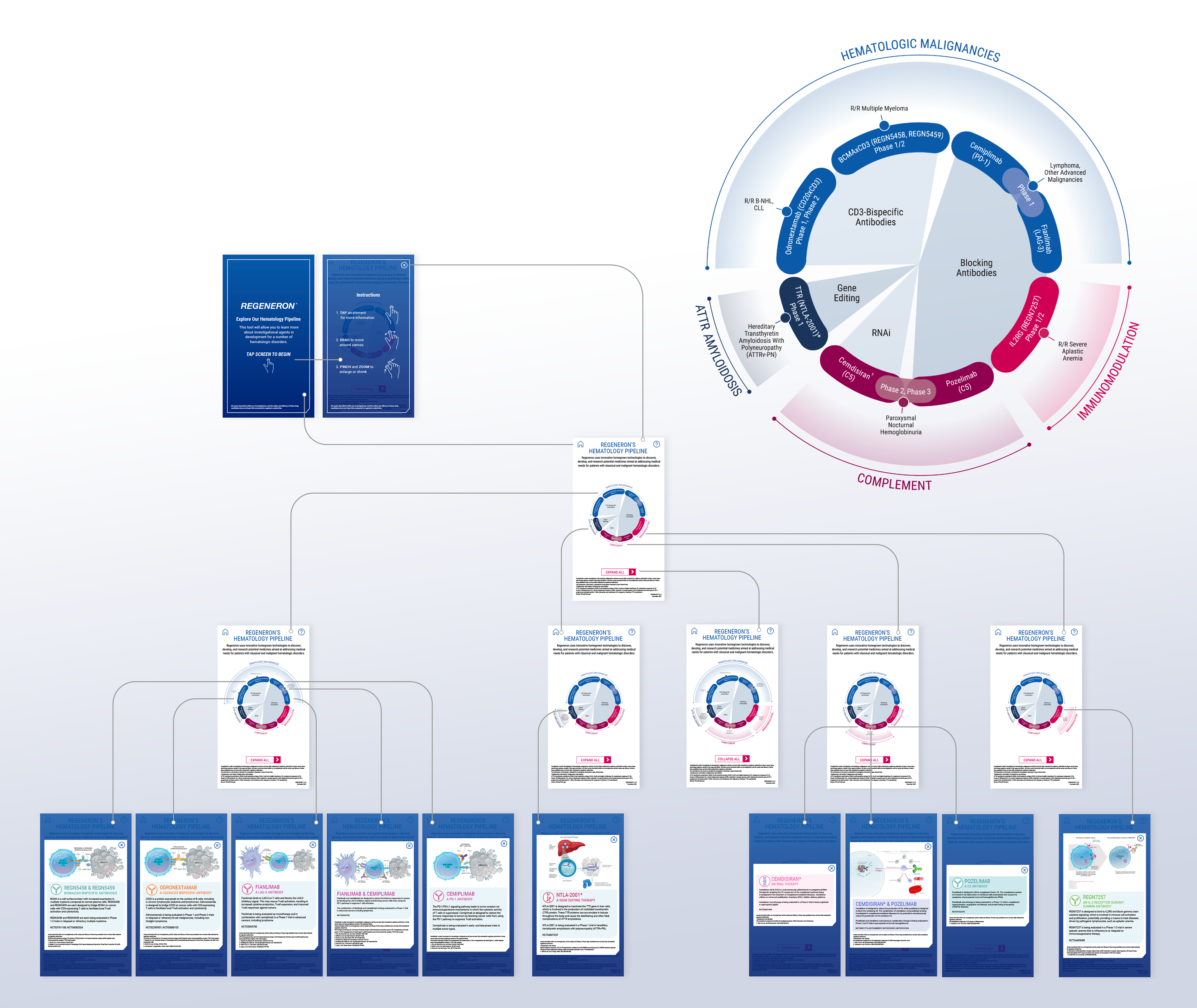
I helped transform the pipeline into an interactive, touch-based canvas that encouraged self-directed exploration. Attendees could tap individual elements and expand the pipeline to reveal additional information.
Selecting an investigational therapy opened a focused content layer with mechanism-of-action, scientific information, and clinical trial details. This approach made the pipeline visually approachable while giving attendees access to deeper information.
Features
Interactive Data Visualization
A dense pharmaceutical pipeline became a visually appealing interface.
Touch-Based Interaction
Tap, drag, pinch/zoom and expand interactions were designed around how users would physically engage with the experience.
Progressive Detail
Users could understand the broader pipeline first, then access detailed scientific information only when needed.
Scientific Storytelling
Mechanism-of-action illustrations and clinical information were incorporated into consistent content overlays.
Outcome
Together, these projects demonstrate how thoughtful UI and interaction design can make complex healthcare information more approachable without oversimplifying the science behind it. Across different brands, audiences, and content types, I focused on creating scalable systems, intuitive navigation, and clear information hierarchy within the constraints of regulated healthcare communications.


